Duck Brand Foam Pipe Covers – Clean Looking Pipe Insulation for Finished Basements, Black Foam Tubes That Blend With Exposed Ductwork and Utility Areas
Duck Brand Foam Pipe Covers – Clean Looking Pipe Insulation for Finished Basements, Black Foam Tubes That Blend With Exposed Ductwork and Utility Areas
Couldn't load pickup availability
Why you'll love it
- Prevents costly water damage and emergency plumber calls from burst frozen pipes
- Self-sealing adhesive edge means no extra tape, glue, or zip ties required for installation
- Recovers energy costs by keeping hot water hot on its way to the faucet
- Made in the USA, appealing to buyers who prefer domestically manufactured goods
- Pre-slit design wraps cleanly around elbows and curved fittings where rigid foam tubes fail
- Safe up to 212°F, suitable for residential hot water lines and low-pressure heating loops
Perfect for
- Wrapping hot water supply lines to reduce standby heat loss and lower energy bills
- Insulating cold water pipes in humid summers to stop condensation drips and ceiling stains
- Protecting exposed pipes in unheated areas from freezing and bursting in winter
- Adding R-3.6 thermal barrier to short curved pipe runs behind washing machines or water heaters
- Retrofit insulation on 1/2" to 3/4" copper or PVC lines without tools
Product Information
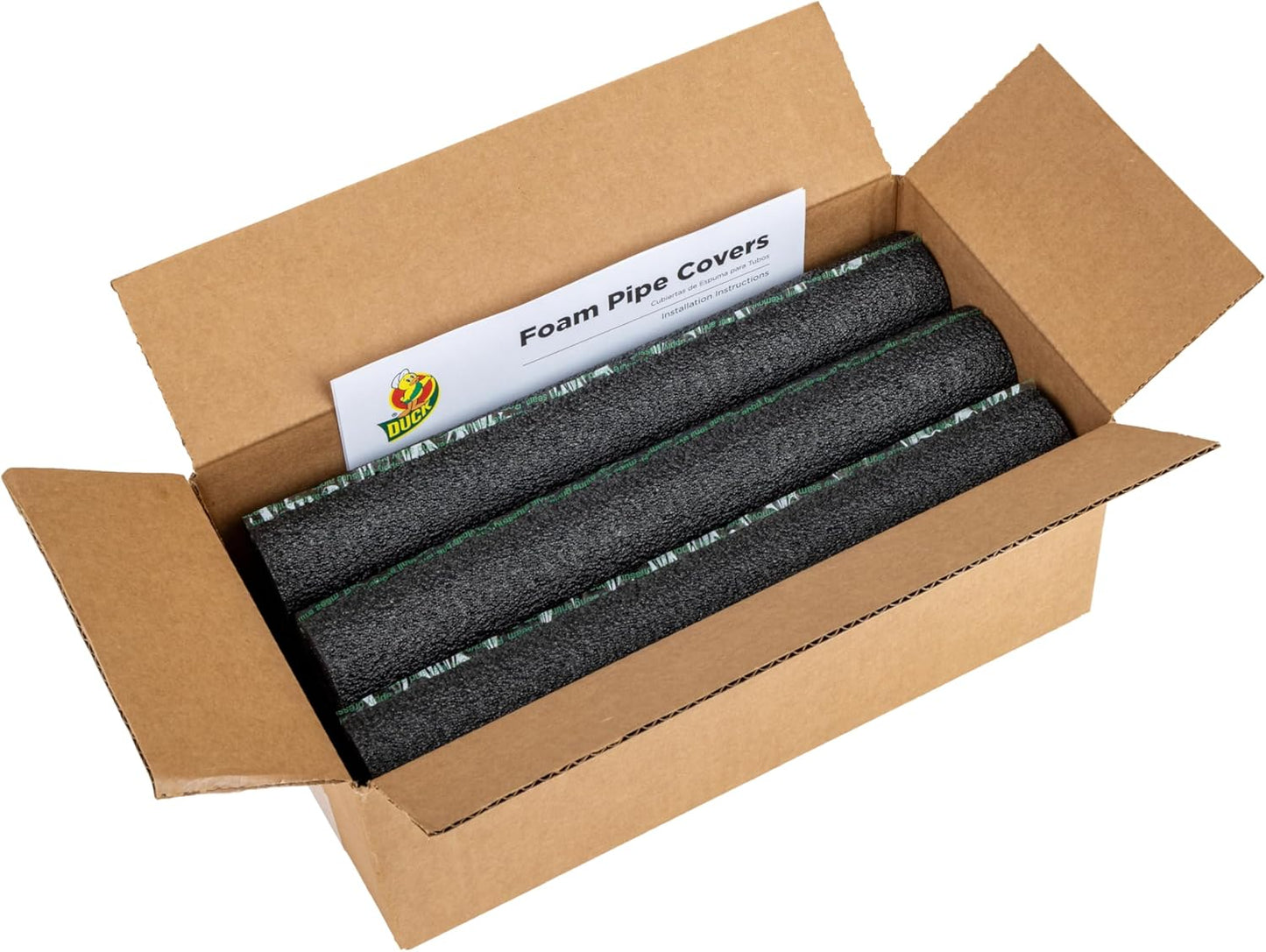
Duck Brand insulating foam pipe stick covers are great for insulating both hot and cold water pipes These foam pipe covers are pre-slit for easy opening and installation on curved pipes and the self sealing edges make it easy to secure Versatile foam pipe insulation helps prevent winter freezing and summer sweating of indoor water, air conditioning and HVAC pipes. Safe for temperatures up to 212 F. These pipe covers have an R Value of 3.6 and can fit 1/2" to 3/4" pipes Each foam pipe stick is 12" long for easy installation. 6 pipe sticks come in a pack for a total of 6 feet of pipe insulation MADE IN THE USA: This Duck Brand product is made in America
Insulating pipes can prevent energy loss helping you save on energy bills while also protecting your home from costly water damage due to frozen pipes. Duck Brand Foam Pipe Covers are great for insulating both hot and cold pipes, preventing them from winter freezing and summer sweating. The sticks are pre-slit for easy opening and installation on curved edges. Plus, the self-sealing edges make it easy to secure on your pipes. Use together with other Duck Brand weatherization products to make your home more comfortable and energy efficient all year long.
Frequently Asked Questions
Will the black foam blend with my exposed ductwork in a finished basement ceiling?
Yes. The matte black color is intentionally chosen to recede against typical black iron ductwork, black iron pipe, and dark mechanical ceilings, so wrapped plumbing reads as part of the existing mechanical aesthetic rather than a visual add-on.
Does the foam have a smooth exterior that looks clean in a visible laundry room or mechanical closet?
Yes. The closed-cell skin gives the tubes a uniform, slightly textured matte finish with no visible fiber, fuzz, or jacket seams, so the wrapped lines look intentional rather than improvised.
Can I paint the foam to match a specific wall or ceiling color in a designer-finished space?
The closed-cell skin accepts many latex and acrylic paints once lightly scuffed. For most design-forward installs, the stock black is chosen specifically to coordinate with mechanical elements and does not require painting.
Will the foam look consistent around elbows and offsets, or will there be visible gaps and wrinkles?
The pre-slit clamshell design lets the foam conform to curved copper and PVC elbows without cutting. The seam presses flat, so corners look uniform and aligned with the straight runs on either side.
Does the 0.75-inch wall look bulky on exposed pipes in a tight utility closet?
At 0.75 inches of wall, the tubes add a slim, uniform profile that reads as a deliberate pipe covering rather than bulky padding. Most homeowners find it tidier than bare copper or PVC, especially where multiple lines run parallel.
Is this product a good way to upgrade the look of a vintage home with original copper plumbing?
Yes. Black foam tubes give exposed copper a clean, modern, intentional look that works with industrial, modern farmhouse, and utilitarian aesthetics. The original copper stays accessible behind the foam for any future work.
Can I use this in a designer-finished basement where the mechanical room is visible from the rec room?
Yes. The black foam matches the visual language of typical ceiling and ductwork in finished basements, so the mechanical room reads as designed rather than as an afterthought even when the door is open.
Will wrapping my pipes in foam make my utility room look more like a finished space and less like a basement corner?
Yes. Bare copper, solder marks, and pipe hangers disappear under uniform black tubes, which immediately reads as a cleaner, more finished utility area.
How does foam pipe wrap compare aesthetically to leaving pipes bare and painted to match the wall?
Painted bare pipes still show every fitting, hanger, and solder joint. Foam tubes create one continuous line per run, which most viewers read as a cleaner, more designed mechanical system.
Compared to PVC jacketing over fiberglass, does this look more like a modern designer choice?
Yes. PVC jacketing shows jacket seams, strap marks, and the fiberglass outline at every joint. Closed-cell foam has no jacket, no straps, and a single uniform surface that reads as a contemporary pipe sleeve.
How does foam pipe insulation compare to chrome-plated pipe covers for a decorative look?
Chrome covers are designed for visible drain lines in open rooms and are not sized or rated for hot water supply insulation. Foam tubes serve a different purpose — functional insulation for mechanical spaces — at a fraction of the cost.
Will the foam yellow or discolor over time in a finished mechanical space with LED lighting?
No. The black foam is color-stable and will not yellow under LED or fluorescent light, and it does not show dust the way white insulation does.
I care about the room looking good as much as functioning well — will the installation look DIY or professional?
The pre-slit and self-sealing design produces clean, parallel seams and consistent butt joints between sticks. With a utility knife for length and a straight edge for the first cut, the finished result reads as a professional mechanical install.
How do I install Duck Brand Foam Pipe Covers on a straight run of pipe?
Measure the run, cut the 12-inch sticks to length with a utility knife, open the pre-slit, fit the foam around the pipe, peel the adhesive liner, and press the seam closed. Butt the next stick against the end of the first and repeat until the run is covered.
How do I handle an elbow or offset fitting where the tube doesn't bend naturally?
Open the clamshell slit fully, fit the foam around the outside of the bend, and let the slit spread slightly to follow the curve. For tight 90s, miter the end of one stick at 45 degrees on each side to make a clean corner joint, then seal the seam as usual.
Do I need any tools, tape, glue, or zip ties to complete the installation?
No. The only tool recommended is a utility knife and a straight edge for cutting the sticks to length. The integrated adhesive edge closes the seam; no tape, glue, wire, or zip ties are required.
Will these foam covers fit my 1/2-inch copper water lines?
Yes. The tubes are sized for standard 1/2-inch residential copper and will also fit 3/4-inch copper and most 1/2-inch PVC cold water lines. The pre-slit opening allows a small range of fit adjustment on either side of the nominal size.
Will this work on PVC drain lines as well as copper supply lines?
Yes, on the smaller PVC sizes. The foam fits standard 1/2-inch and 3/4-inch PVC. For larger PVC drain lines, you will need a larger-diameter insulation product; these sticks are not designed for 2-inch or larger drains.
What is included in the package and do I need to buy anything else?
Each package contains six 12-inch pre-slit foam sticks for 6 linear feet of coverage total, with the self-sealing adhesive strip already applied. You will need a utility knife and a straight edge for cutting; nothing else is required for a standard install.
Will the foam grow mold or hold moisture against the pipe over time?
No. The closed-cell foam does not absorb water and does not provide a food source for mold. It is the same material used in cooler lids and protective packaging, chosen specifically because it stays dry in humid conditions.
How long will the foam last once installed on residential pipes?
Indoor residential installations typically last 10+ years. The closed-cell foam is stable, the adhesive bond is long-term, and there are no moving parts or consumables to replace.
What is the difference between foam pipe insulation and heat tape or heat cable for freeze protection?
Foam is a passive thermal barrier that slows heat loss and keeps cold away from the pipe with no electricity required. Heat tape is an active electric heating element that warms the pipe using household current. Foam is the lower-cost, lower-maintenance, zero-energy option, and is the right first choice for most residential freeze prevention.