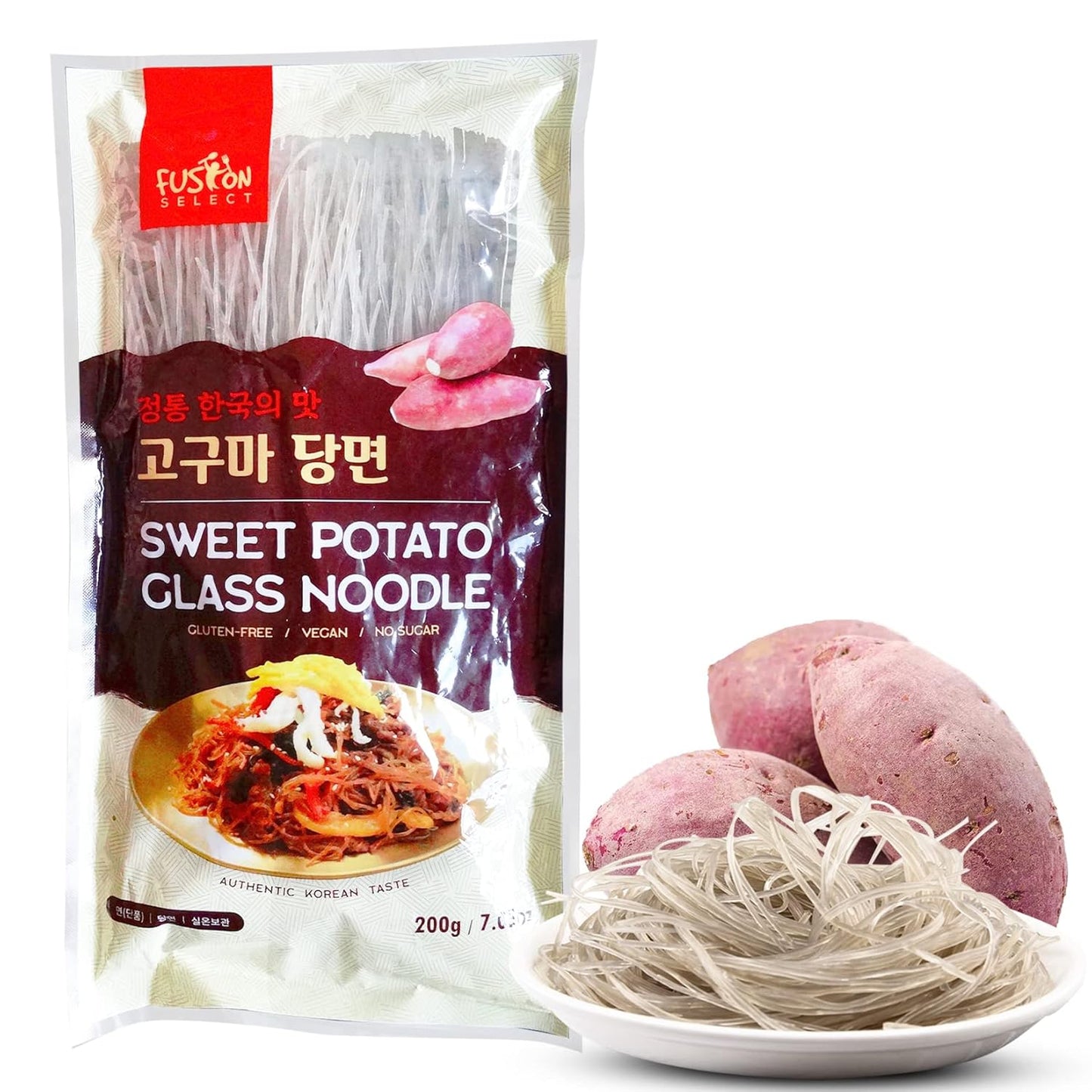
Fusion Select Sweet Potato Glass Noodles – Two-Ingredient Pantry Essential for Clutter-Free Kitchens, Stir-Fry
Fusion Select Sweet Potato Glass Noodles – Two-Ingredient Pantry Essential for Clutter-Free Kitchens, Stir-Fry
Couldn't load pickup availability
Why you'll love it
- Zero fat, low calorie, and no sodium support strict diet plans without sacrificing a noodle craving
- Naturally gluten-free sweet potato starch is safer for celiac and gluten-sensitive eaters than wheat-based alternatives
- Two-ingredient clean label (sweet potato starch + water) appeals to minimal-ingredient shoppers
- Vegan-compatible formula fits plant-based households with no animal-derived additives
- One product works across Chinese and Korean recipes (stir-fry, dumplings, hot pot), reducing pantry clutter
- 2-pack format delivers better value per ounce for frequent home cooks
- Noodles are a perfect length — no cutting required, fit easily into containers for soaking
- Great for soaking up broth flavor
- Shipped in original packaging, not expired
- Good quality cooking product
- Packed well by seller with good Amazon carrier service
- Firm texture after cooking
- High in protein
Perfect for
- Quick stir-fry base as a low-calorie substitute for wheat or rice noodles
- Hot pot noodle component for Korean or Chinese-style meals
- Dumpling filling or wrapper for gluten-free Asian dumplings
- Clean-ingredient ramen-style soup noodles for diet-restricted eaters
- Bulk meal prep of gluten-free, no-sodium lunch bowls
- Using as spaghetti substitute in Italian-style pasta dishes
- Cooking in broth where noodles absorb flavor and liquid
- Cooking Korean Japchae for special occasions like a niece's birthday
- Making single-serving meals for one person due to compact portion sizes
This Is Your Sign To Finally Try Cooking With Glass Noodles.

Made of sweet potato starch, glass noodles are a versatile ingredient found in many delicious Asian dishes. There are many different recipes out there, from Korean Japchae to Chinese hotpot, that all promise to be nutritious, flavorful, and fun to try. You can also use glass noodles to bulk up salads and stir-fry, or to stuff spring rolls and dumplings. They're easy to store and easy to cook with, and can be served a number of different ways, dry or in soup. So, if you’re ready to expand your culinary repertoire, you’ve found the right ingredient.
These Sweet Potato Noodles from Fusion Select will get you cooking!

Try Traditional Flavors
In Korean cuisine, sweet potato glass noodles are called dangmyeon and are most famously known for being in japchae — a sweet and savory noodle stir-fry dish covered in dark, sweet, umami sauce, tossed with meat and nutritious vegetables.
Glass noodles can also be used to make suan la fen, a bold, spicy Sichuan dish that places thicker sweet potato noodles in a hot, savory broth. With noodle packs that contain 10 servings each, you can try out multiple recipes!

A Diet-Friendly Alternative
Cup ramen is delicious and easy to make, especially on the days you're too busy or too distracted to cook. But regular noodles are incredibly high in sodium and having them for snacks or dinner too often could put you at risk for a number of wellness issues.
On the other hand, sweet potato noodles are made without sodium, and are also low in calories, sugar, and fat.

Makes Fun & Easy Recipes
Is it hard to prepare glass noodles? Absolutely not.
Glass noodles are packaged into dry bundles that soften and expand in boiling water. But don't leave them in too long, or they might break down. 2-3 minutes will do the trick. You can also tell if glass noodles are cooked if they've turned from white to transparent.
After that, you can toss the noodles into your sauce or add them to a stir-fry!
Here’s More To Know And Love About This Amazing Noodle!

Silky & Delicate
Glass noodles get their name because of how they turn translucent when cooked. But sometimes they are also called cellophane noodles, this time after their soft and gelatinous texture.
Light, springy, and slippery, glass noodles are excellent in a stir-fry because they're less likely to clump. And because they don't lose their structure whether they're served hot or cold, they also taste good in hot or chilled soup, like mu naengmyeon.

Soaks Up Flavor
Pasta and ramen noodles are made from flour. Glass noodles are made from sweet potato starch. That means they aren't as sticky, nor do they have much of a distinctive taste.
But they make up for it with how seamlessly they borrow or absorb it. The mild sweetness offsets pungent flavors, which is why glass noodles are often found in spicy and savory dishes, in soup, or covered in sauce.

Easy To Store
Dry glass noodles don’t need to be kept in the refrigerator. They can be kept somewhere dry at cool to room temperature for several months up to a year.
Meanwhile, freshly cooked noodles will last up to four hours out of the fridge, 3-5 days inside, and maybe even months in the freezer — but for the sake of flavor, it’s better to consume your noodles almost immediately after cooking.
Package Dimensions : 13.98 x 6.14 x 2.09 inches; 7.05 ounces UPC : 810081771702 Units : 14.1 Ounce Best Sellers Rank: #7,879 in Grocery & Gourmet Food Ingredients Sweet Potato Starch, Water Legal Disclaimer Statements regarding dietary supplements have not been evaluated by the FDA and are not intended to diagnose, treat, cure, or prevent any disease or health condition. Item Weight 7.05 Ounces Package Information Pack Flavor Sweet Potato Package Weight 0.42 Kilograms Brand Fusion Select
Frequently Asked Questions
Is it really only two ingredients, or are there hidden additives in the label?
It is truly two ingredients: sweet potato starch and water. There are no gums, preservatives, or flavor additives listed, which suits a minimalist pantry.
Will one product really replace several noodle types in my kitchen?
Yes. The same pack works for stir-fries, dumplings, hot pot, soups, and pasta-style dishes, so you can stop stocking rice noodles, wheat noodles, and glass noodles separately.
Does the packaging look clean enough to leave out on an open shelf?
The 2-pack format ships in straightforward original packaging without excess plastic, and the simple ingredient story makes it easy to display in a visible, organized pantry.
Are the noodles truly transparent and neutral so they fit a clean plating aesthetic?
Yes. When cooked, they turn glassy and neutral in color, letting the colors of your vegetables, broth, and sauce stay the visual focus of the plate.
Can I use one product across both Chinese and Korean recipes without cluttering my pantry?
Yes. These glass noodles are designed for stir-fry, dumplings, and hot pot across both Chinese and Korean cuisines, so one item covers several recipe styles.
I'm rebuilding my pantry around fewer, better ingredients — is this a smart swap?
Yes. One 2-pack covers stir-fry nights, hot pot dinners, and gluten-free pasta swaps, replacing three or four specialty noodle SKUs with a single, clean-ingredient option.
Do the noodles require any special prep tools that would clutter my kitchen?
No. You only need a pot of boiling water and a strainer. There is no special equipment, soaking bowls, or extra gadgets required.
Is the 2-pack format a better value than buying single bags?
Yes. The 2-pack delivers more noodles per ounce, which fits a minimalist shopper who prefers buying less often in larger, better-value units.
How do these compare to shirataki noodles for a clean-eating kitchen?
Unlike shirataki, these are made from sweet potato starch and water only, with a firmer, more traditional noodle bite, and they absorb broth and sauce flavor more readily.
Are these a better minimalist pick than typical wheat glass noodles?
Yes. Wheat-based glass noodles can contain gluten and extra sodium, while these are gluten-free, fat-free, and sodium-free, with a shorter, cleaner ingredient list.
Why is there a Prop 65 warning if the ingredients are so simple?
California's Prop 65 requires a warning on many foods and household products regardless of how simple the ingredients are. It is a standard legal notice, not a sign of poor quality.
Is the texture too soft or too chewy to look good in a clean, simple bowl?
The noodles hold a firm, chewy texture after cooking, so they photograph and plate well without turning to mush, which suits a minimalist plating style.
I'm trying to reduce packaging waste — is the 2-pack bulky or hard to store?
The 2-pack is compact and ships in original packaging without extra boxing, so it stores easily in a narrow pantry, a single drawer, or a small basket.
How do I cook sweet potato glass noodles on the stovetop?
Bring a pot of water to a boil, add the noodles, and cook for 4-6 minutes until tender but still chewy. Drain, rinse briefly under cool water, then add to stir-fry, soup, or hot pot. Do not overcook, as they will soften more when added to hot dishes.
Can I make gluten-free dumplings with these noodles?
Yes. Cook the noodles, chop them finely, and mix with seasoned vegetables and protein to use as a gluten-free dumpling filling, or process them into a pliable dough to form simple gluten-free wrappers.
How should I store the noodles after opening the pack?
Reseal any unused noodles in an airtight container or clip the bag closed, and store in a cool, dry pantry. Keep away from moisture to preserve texture and prevent clumping.
Are these noodles compatible with my gluten-free and vegan household?
Yes. The noodles are made only from sweet potato starch and water, so they are naturally gluten-free and contain no animal-derived ingredients, fitting both gluten-free and vegan diets.
Do these noodles work in a Korean or Chinese hot pot setup?
Yes. They are a traditional glass noodle choice for hot pot. Add them directly to the simmering broth during the last few minutes of cooking so they soak up flavor without falling apart.
What is included in the 2-pack when it arrives?
You receive two sealed bags of sweet potato glass noodles for a total of 14.1 oz (7.05 oz per bag), shipped in the original brand packaging. No additional accessories or tools are included, and you only need a pot and water to start cooking.
Are these noodles safe for someone with a grain allergy?
Yes. The noodles are made from sweet potato starch, which is a root vegetable starch rather than a grain, so they are typically safe for people with grain or wheat allergies. Always confirm with your doctor for severe allergies.
Why do the noodles become hard to see when boiling, and how do I know they are done?
Sweet potato glass noodles turn transparent and glass-like in boiling water, which makes them nearly invisible. To check doneness, fish one out with chopsticks or a fork and taste it — it should be tender with a slight chew, typically after 4-6 minutes.
What is the difference between sweet potato glass noodles and mung bean glass noodles?
Both are translucent Asian glass noodles, but sweet potato glass noodles are made from sweet potato starch, giving them a chewier, springier bite and a slightly thicker strand. Mung bean glass noodles are typically thinner, more delicate, and made from mung bean starch, with a milder flavor. Sweet potato versions also tend to be more filling and work well in hot pot and stir-fry.