Spec Ops Tools Framing Hammer, SRS Lanyard Compatible 22 oz Hammer for Safe Overhead Tethering
Spec Ops Tools Framing Hammer, SRS Lanyard Compatible 22 oz Hammer for Safe Overhead Tethering
Couldn't load pickup availability
Why you'll love it
- 25% lighter head reduces arm fatigue during 8-10 hour framing days
- MOA shock-absorbing grip minimizes wrist sting when striking hard engineered beams
- magnetic nail starter enables true one-handed overhead nailing for faster framing
- MIL-SPEC durability and 100ft drop test mean the tool won't fail mid-project
- 3% of proceeds support veteran and first responder causes, aligning purchases with values
- lifetime hassle-free warranty removes replacement cost risk
Perfect for
- framing interior and exterior walls on new construction
- rapidly starting and driving nails overhead into ceiling joists and beams
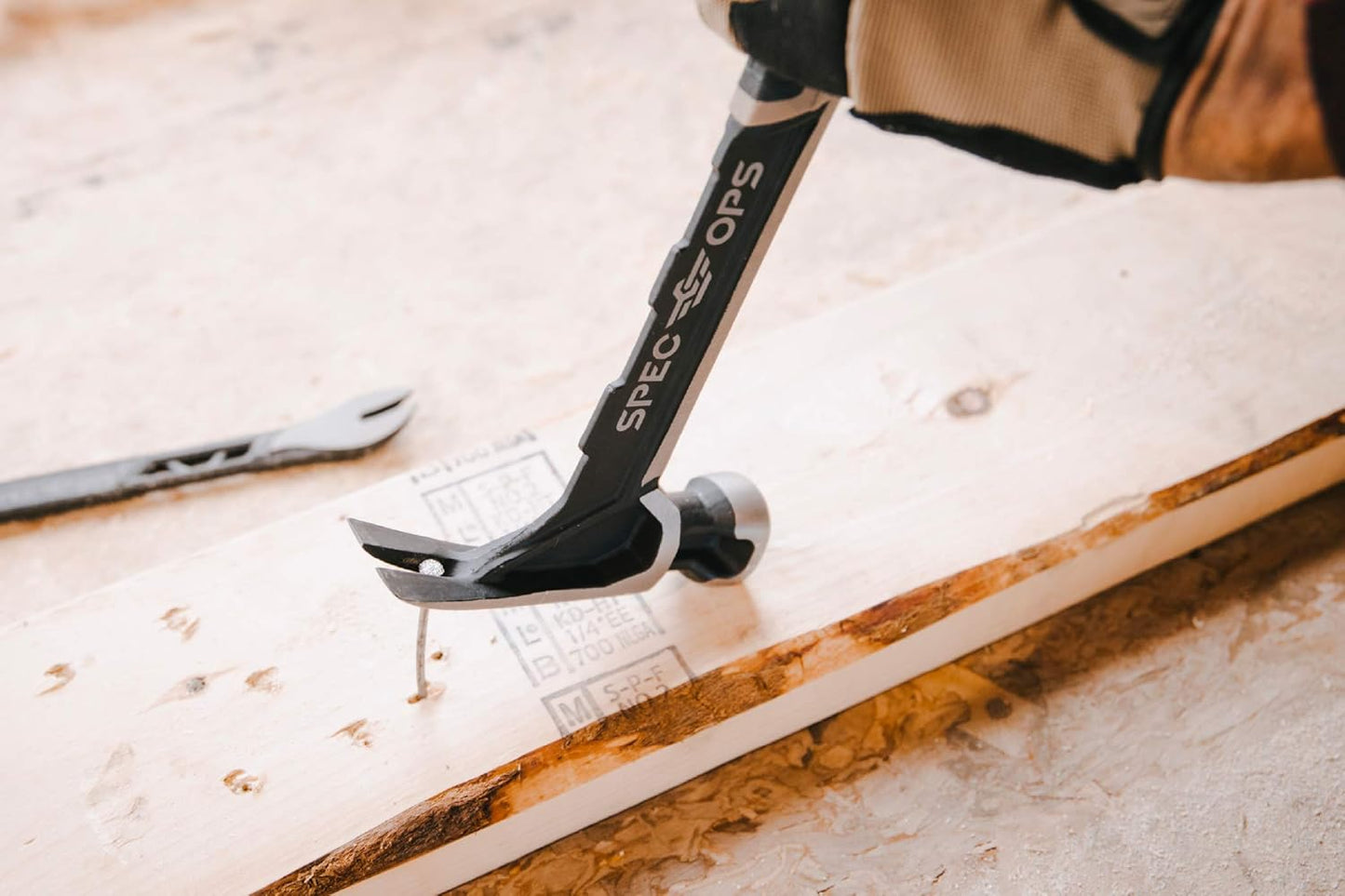
- demolishing framing and prying/removing nails with the rip claw
- swinging for long shifts without hand fatigue on engineered lumber
- safely tethering the hammer at height on multi-story framing jobs


Product Information
25% lighter head for sniper-controlled swing Ballistically balanced for maximum striking power Shock-absorbing, MOA grip for precision accuracy and less sting Magnetic nail starter for rapid nail driving Compatible with SRS retention lanyards for added safety
Meet the ultimate jobsite wingman. Purposefully engineered for elite builders, contractors, and tradesmen, the Spec Ops 22 oz. Framing Hammer delivers failsafe performance and power on every mission. With an aerodynamic, high-carbon steel head that’s 25% lighter and a ballistically balanced design, this hammer provides sniper-controlled swings at maximum velocity, and brute, unadulterated striking power that puts old-school, heavy hammers to shame. For optimum vibration reduction, the bi-material handle is built with a rugged frame and a camo-textured, MOA grip that absorbs shock and lessens sting even when nailing into the hardest materials like engineered beams. To help you work faster, safer, and more precisely, this hammer features a magnetic nail starter for rapid driving while extending overhead reach and range, a milled face for improved nail grip, and a lanyard hole for compatibility with SRS Safety Retention Systems. This framing hammer also features a versatile rip claw for precision demo, nail removal, and splitting. And with a guarantee to deliver a lifetime of mission capability on the world’s toughest jobsites, this hammer is forged with heat-treated, high carbon steel and drop tested at 100 feet to surpass MIL-SPEC standard. All Spec Ops tools are backed by our five-star, hassle-free lifetime warranty, and with each purchase made, we support our nation’s heroes by donating 3% of proceeds to veteran and first responder causes
Frequently Asked Questions
Does the SRS lanyard compatibility actually prevent dropped tools at height?
Yes. The handle is engineered to accept standard SRS retention lanyards, so you can tether the hammer to your wrist or harness when working on second-story framing, roofs, or elevated decks. A tethered hammer can't fall on a coworker below, which is one of the leading causes of serious jobsite injuries and OSHA citations.
Will the shock-absorbing grip reduce wrist and elbow injuries over time?
Yes. The MOA shock-absorbing grip dampens impact vibration at the source, which is the primary cause of repetitive strain injuries in framers. Crews who switch to vibration-dampened grips typically report less wrist sting, fewer tennis elbow flare-ups, and longer careers without the cumulative trauma injuries that end trade careers early.
Is the magnetic nail starter safer than pinching nails with my fingers?
It's significantly safer. Pinching a nail between your thumb and the head of the hammer is one of the most common ways framers smash their fingers, especially when starting nails overhead. The magnetic starter holds the nail in place so your fingers stay out of the strike zone entirely.
What does the 100ft drop test actually mean for jobsite safety?
The 100ft drop test means the hammer was dropped from 100 feet onto concrete and survived functional use. For crews working on multi-story framing, scaffolding, or elevated decks, that durability matters because a hammer that cracks or shatters on impact can send shrapnel down on workers below.
Is the rip claw designed to reduce injury during nail pulling and demolition?
The rip claw is shaped to give you maximum leverage with minimum effort, which reduces the strain on your wrist, elbow, and shoulder when pulling framing nails or prying apart demo'd lumber. The MIL-SPEC heat-treated steel also means the claw won't bend or snap mid-pull and send the hammer flying.
Is this hammer a safer choice for first responders and veteran framers with prior injuries?
Yes. The shock-absorbing grip, lighter head, and magnetic nail starter all address the specific repetitive strain and impact injuries that affect framers, especially those working through prior service-related injuries. Many veteran and first responder tradesmen choose this hammer specifically because it lets them keep working longer with less pain.
Does this hammer meet any military or jobsite safety standards?
It is built to MIL-SPEC durability standards and drop tested at 100 feet, which exceeds most commercial jobsite tool requirements. The SRS lanyard compatibility also meets common fall protection tool tethering standards used on commercial and military construction sites.
Will the camo grip stay secure if my hand is sweaty, oily, or gloved?
Yes. The bi-material MOA grip is engineered for high-friction performance in wet, oily, sweaty, and gloved conditions. A secure grip means the hammer won't slip out of your hand mid-swing, which is a common cause of impact injuries and tool drops on framing crews.
Can I use this hammer safely on a ladder or scaffolding?
Yes, especially when paired with an SRS retention lanyard. The tether point, lighter head, and magnetic nail starter all reduce the risks that come with one-handed overhead work from a ladder or scaffold. Many framing crews standardize on this setup for safety compliance on multi-story jobs.
Is the hammer head secure on the handle, or could it fly off during a hard swing?
The head is epoxy-bonded and mechanically wedged to the handle using MIL-SPEC construction methods, which is the same secure attachment used on professional-grade framing hammers. The head will not loosen or fly off during normal use, even on high-velocity swings into engineered lumber.
How does this compare to a fiberglass-handled hammer for safety?
Fiberglass-handled framing hammers are more durable than wood handles but transmit more vibration to your hand and wrist. The Spec Ops Tools hammer's MOA shock-absorbing grip reduces that vibration more effectively, which lowers the cumulative trauma risk that causes long-term wrist and elbow injuries.
How does this compare to an anti-vibration hammer like a Stiletto TiBone for safety?
Stiletto TiBone titanium hammers are very light and have good vibration control, but the Spec Ops Tools hammer matches much of that vibration reduction at a lower price point and adds a magnetic nail starter and SRS lanyard compatibility. For safety-focused framers, those added features can matter as much as the grip itself.
How does this compare to using a framing nailer for jobsite safety?
Framing nailers reduce repetitive swing injuries but introduce their own risks from accidental discharge, hose trips, and air compressor noise. The Spec Ops Tools hammer is the safer option for connector work, blocking, tight spots, and overhead tasks where a nailer is too bulky, awkward, or unsafe to use.
I'm worried the magnetic nail starter will weaken the hammer head over time.
The magnet is a sealed rare-earth unit that does not affect the structural integrity of the heat-treated high-carbon steel head. The head is drop tested at 100 feet and built to MIL-SPEC standards with or without the magnet, so there is no safety trade-off for the convenience.
I'm worried the shock-absorbing grip will detach from the handle during heavy use.
The MOA grip is molded and bonded directly to the handle as a single unit, not slipped on as a separate sleeve. It will not slide, twist, or detach during framing, demolition, or overhead work, even with daily jobsite abuse.
I'm worried the hammer is too light to be safe on heavy demolition work.
For framing hammer demolition like pulling nails, prying trim, and disassembling framing, 22 oz is the safe and standard weight. Heavier demolition like concrete breaking or post driving requires a sledgehammer, and using a framing hammer for those tasks is unsafe regardless of brand.
How do I start a nail one-handed with the magnetic nail starter?
Hold the hammer head with the milled face toward the nail, place the nail point on the wood where you want it, and let the magnet pull the nail head against the face. The nail stays in place as you raise the hammer and strike. This is especially useful for overhead joist and beam work where you can't pinch the nail with your other hand.
How do I use the rip claw to pull a framing nail?
Slide the V-shaped slot of the rip claw under the nail head, rock the handle back to lift the nail partway, then place a piece of scrap wood or a nail puller block under the claw for leverage and finish pulling. The rip claw geometry is designed to give you maximum prying power with minimum strain on your wrist.
How should I store and maintain the hammer to make it last?
Wipe the head and claw dry after wet use, store the hammer indoors or in a dry toolbox, and apply a light coat of tool oil to the head occasionally to prevent rust. Keep the grip clean of dirt and pitch with mild soap and water. With basic care, the heat-treated high-carbon steel head and bonded MOA grip will last for decades.
Is the hammer compatible with SRS retention lanyards for working at height?
Yes. The handle is engineered for SRS retention lanyard compatibility, so you can tether the hammer to a wrist strap or full-body harness when working on scaffolding, ladders, or elevated framing. This keeps the tool from falling on workers below and meets most commercial and military tool tethering requirements.
Does the hammer work with standard replacement handles from third parties?
The hammer is built as a one-piece bonded assembly for maximum durability and shock absorption, which means it is not designed to be re-handled with off-the-shelf replacement handles. The MIL-SPEC construction and lifetime hassle-free warranty cover any handle or grip failure, so replacement is handled through the manufacturer.
What comes in the box when I order the hammer?
The hammer ships in retail packaging with the 22 oz framing hammer secured inside. No batteries, chargers, or accessories are required, and the tool is ready to use straight out of the box. The lifetime hassle-free warranty is included with purchase.
Is the hammer safe to use on engineered lumber like LVLs, glulams, and I-joists?
Yes. The milled face and shock-absorbing grip are specifically designed for the hard, dense engineered lumber used in modern framing. You get good nail grip without excessive vibration sting, and the MIL-SPEC head holds up to the higher impact forces of striking engineered beams.
What is covered under the lifetime hassle-free warranty?
The lifetime hassle-free warranty covers manufacturing defects, head loosening, grip failure, and similar issues for the life of the tool. If the hammer fails under normal use, the manufacturer replaces it without requiring extensive proof of purchase or complicated return procedures.
What is the difference between a framing hammer and a regular claw hammer?
A framing hammer has a longer handle, a heavier head (typically 20-32 oz), a milled face for grip on framing nails, and a straighter rip claw designed for prying apart framing lumber and pulling large nails. A regular claw hammer is shorter, lighter, has a smooth face for finish work, and a curved claw optimized for pulling small nails. Framing hammers are built for high-volume rough framing, while claw hammers are general-purpose tools.